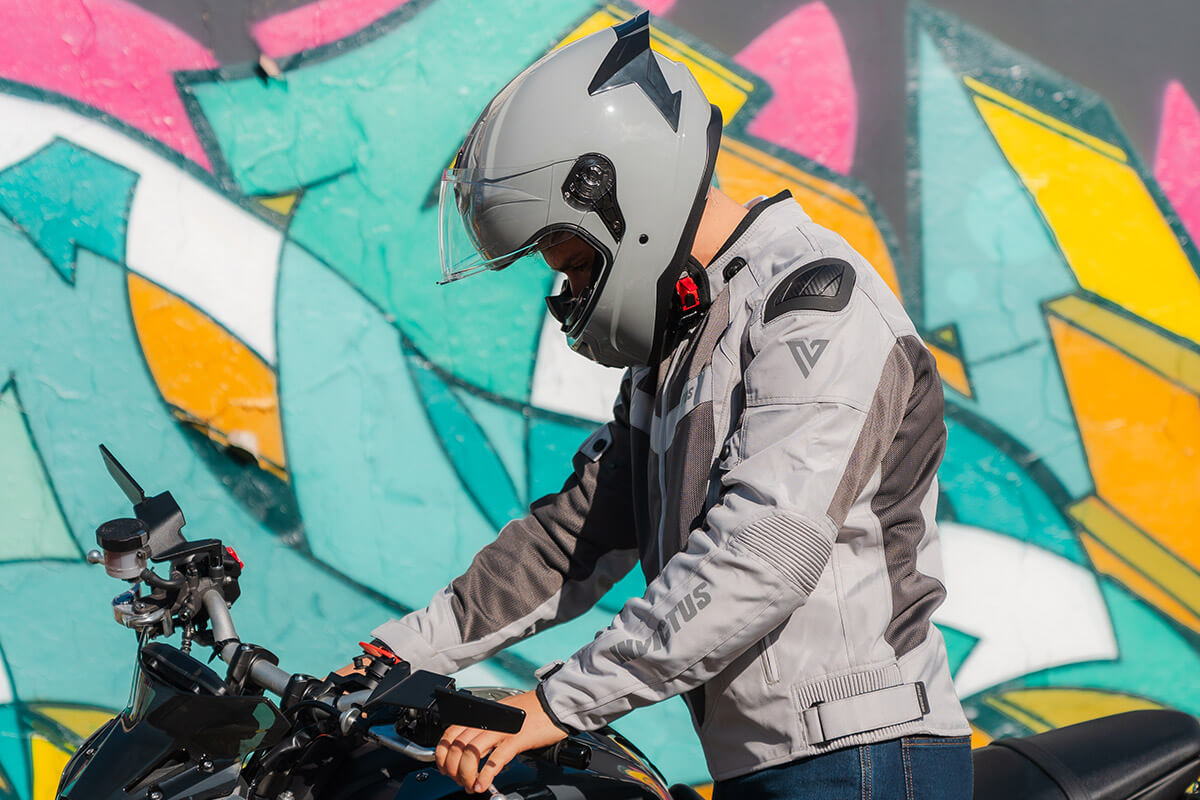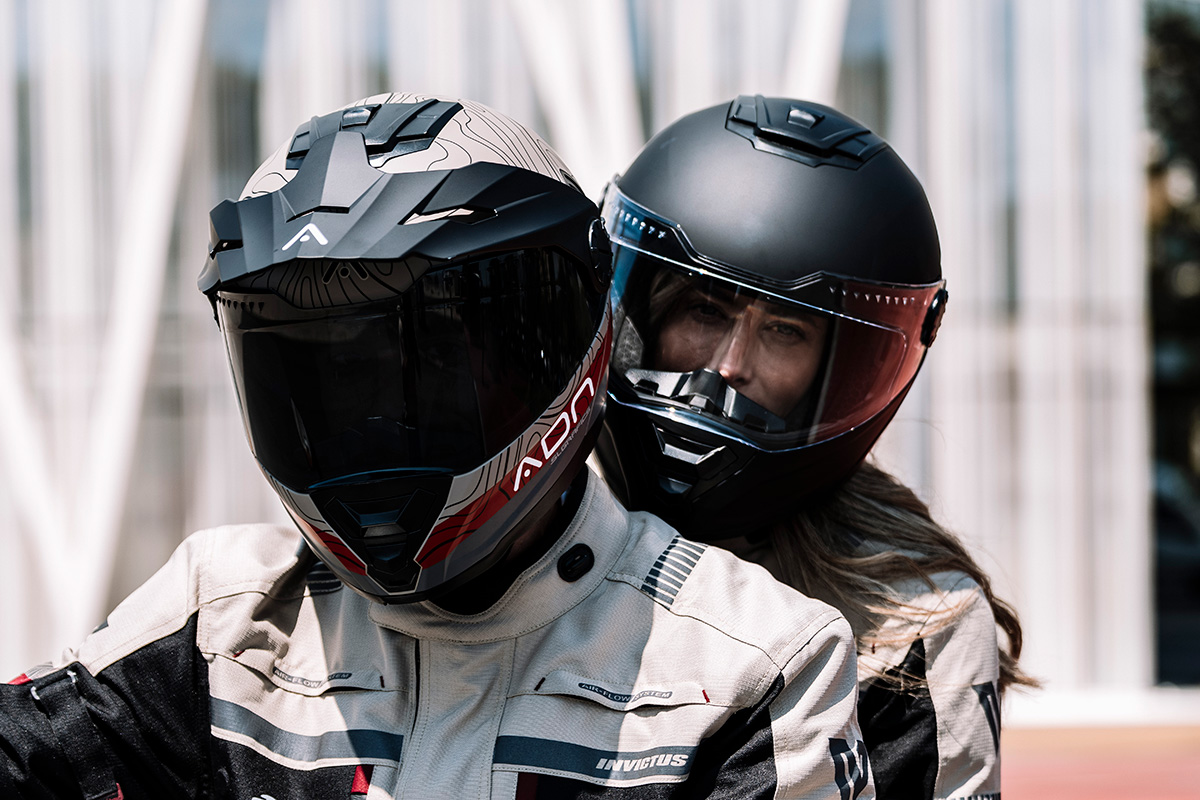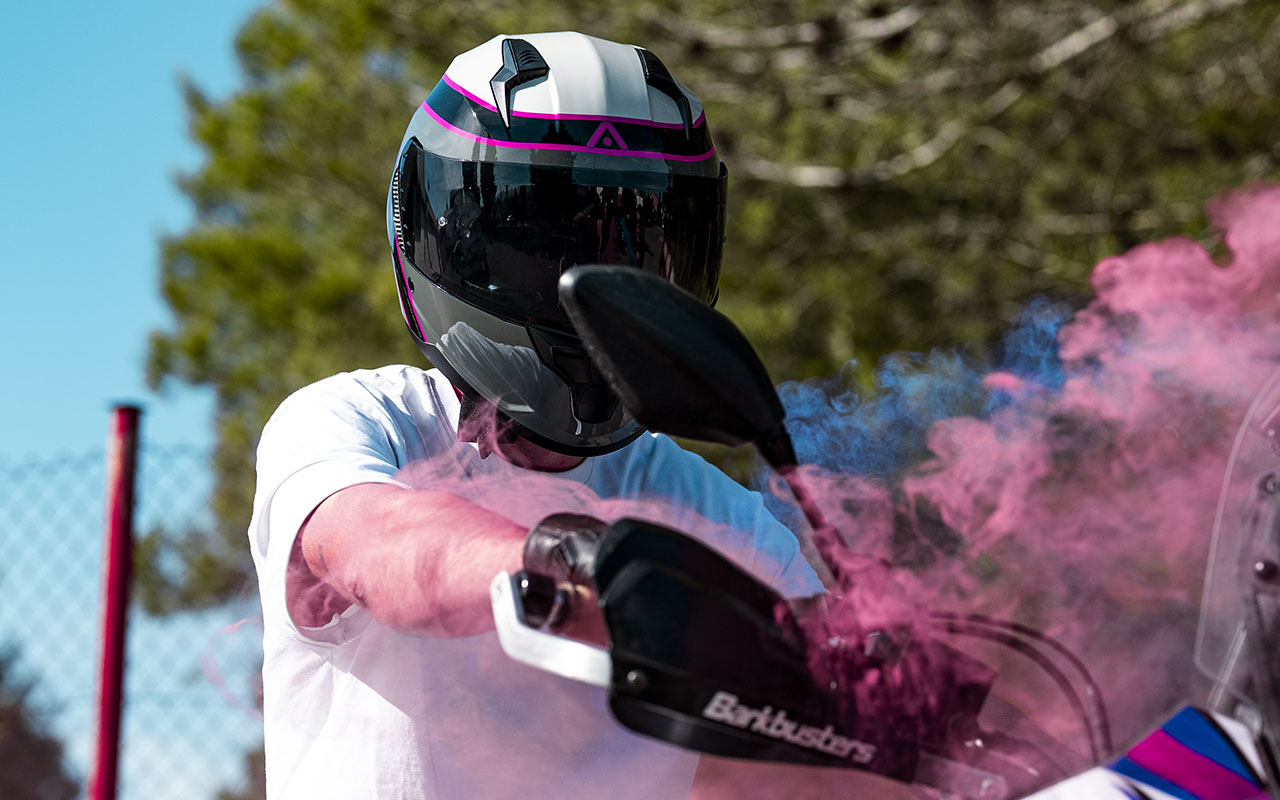
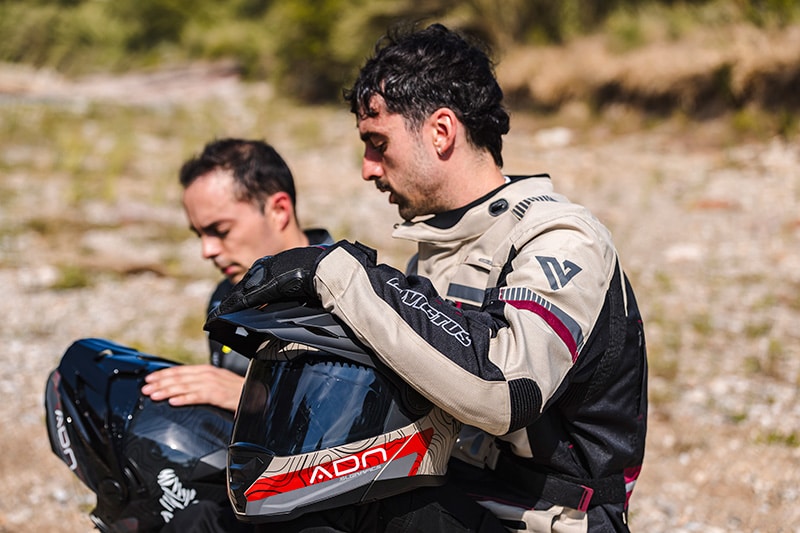
There are four types of motorcycle helmets. No more than that. What varies is the type of rider each one is designed for, and choosing the wrong one has real consequences: discomfort on every ride, unnecessary heat, or insufficient protection for how you use it.
This guide isn’t going to tell you that helmets are required or that they protect your head. You already know that. What you’ll find here are real criteria to help you figure out which one is right for you.
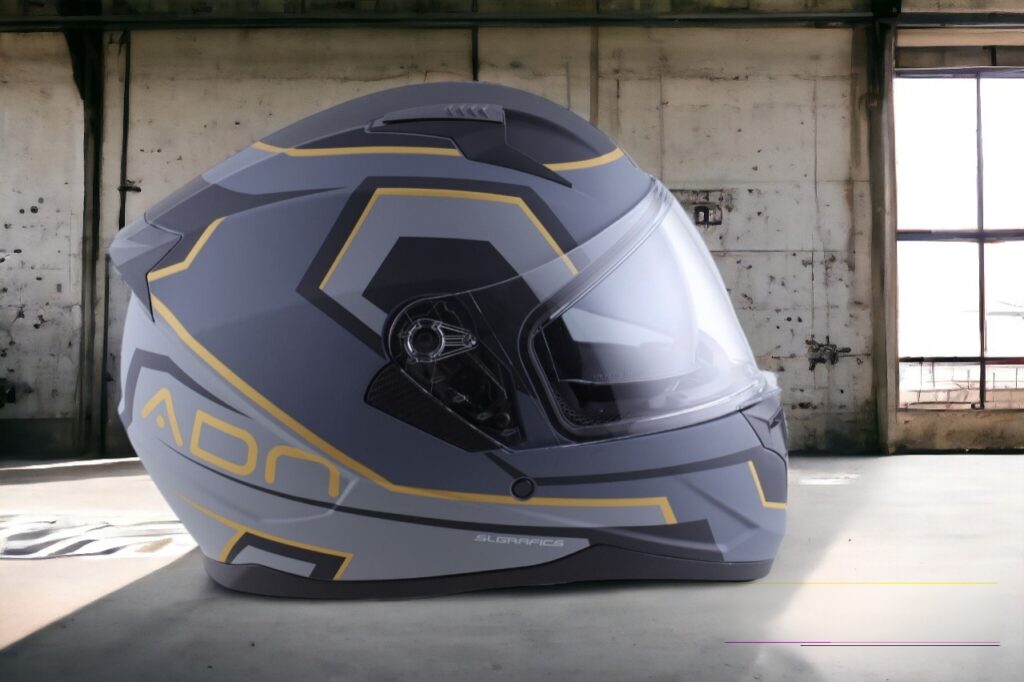
Full-face helmet: the one that doesn’t compromise on protection
A full-face helmet is a single-piece helmet that covers the entire head: the top of the head, cheeks, chin, and back of the neck. There are no moving parts, and no flip-up chin guard. What you see is what you get, and that’s exactly its strength.
Because it is a seamless structure, the full-face helmet offers the highest level of protection of any type of motorcycle helmet. In the event of an impact, there are no joints that could give way. The energy is distributed evenly throughout the shell. That is why it is the helmet of choice for racing riders, and why it remains the gold standard when safety is the top priority.
That doesn’t mean it’s uncomfortable for everyday use. A good, lightweight full-face helmet feels much less heavy on your head than a mid-range model that weighs more. Weight is the factor that makes all the difference on long rides or in everyday use.
Most full-face helmets feature a built-in sun visor that can be extended using an internal lever. This is useful for adjusting to changing light conditions without stopping. If you want to better understand what to look for before buying one, we explain it in detail in our comprehensive guide to full-face motorcycle helmets.
Who is the full-face helmet for?
- I frequently drive on roads or highways.
- Safety is your top priority.
- You don’t stop all the time in the city.
- You’re looking for the best balance between protection and weight.
ADN Full-Face Helmets
ADN has two all-inclusive packages in its catalog: the Stelvio and the Veloce. Both are ECE 22.06-certified and feature a built-in sun visor. The Veloce is geared toward a sportier profile; the Stelvio is the best-selling model in the lineup, offering a price-to-protection ratio that’s hard to beat in its segment. You can check out the Stelvio vs. Veloce comparison if you’re unsure which one to choose.
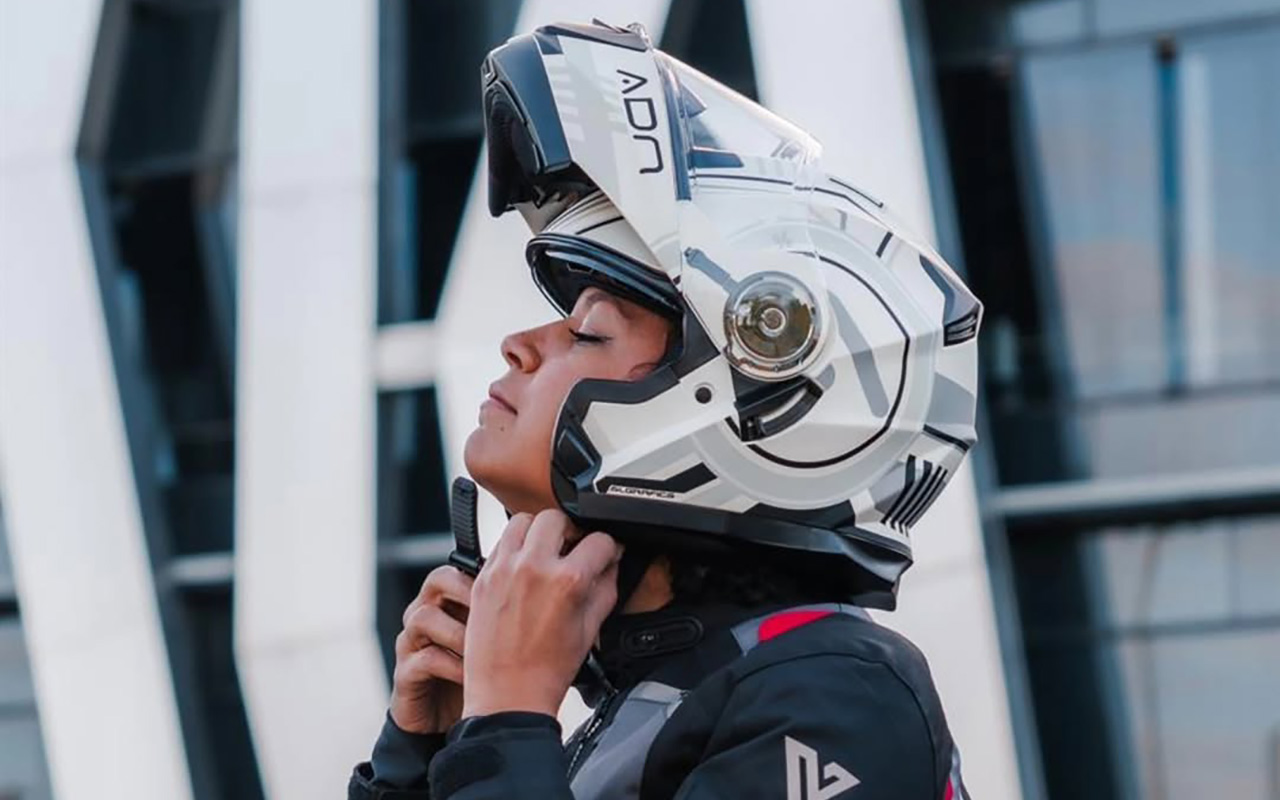
Modular helmet: when you stop frequently and don’t want to take off your helmet
A modular helmet —also known as a flip-up helmet—is based on the same structure as a full-face helmet, with one key difference: the chin guard can be flipped up, exposing the face without having to remove the helmet.
That makes it a favorite among drivers who make a lot of stops: in the city, at toll booths, at gas stations, and for chats at traffic lights. The appeal of a modular motorcycle isn’t its weight—it’s usually heavier than a monocoque bike because of its internal mechanism—but rather its everyday versatility.
Here’s a detail that many people overlook: not all modular helmets are approved for use with the chin guard open. Only those with dual P/J (Pedestrian/Jet) certification allow you to do so legally. If you buy a modular helmet without that certification and wear it with the chin guard open, you’re technically riding without an approved helmet. We explain this in depth in the article on what P/J certification means for modular helmets.
If you’re still unsure whether to stick with a full-face helmet or make the switch to a modular helmet, this article will help you decide: modular vs. full-face helmets—which one to choose based on your needs.
Who is the modular helmet designed for?
- Long routes combined with urban sections.
- You stop frequently and don’t want to take off your helmet every time.
- Touring or grand touring motorcycle riders.
- Someone who wears prescription glasses and has trouble putting on a full-face helmet.
ADN Modular Helmet
The Audace DNA is the only modular model in the lineup. It features dual P/J certification, a one-touch folding mechanism, and a lightweight design for its class. Available in various finishes.
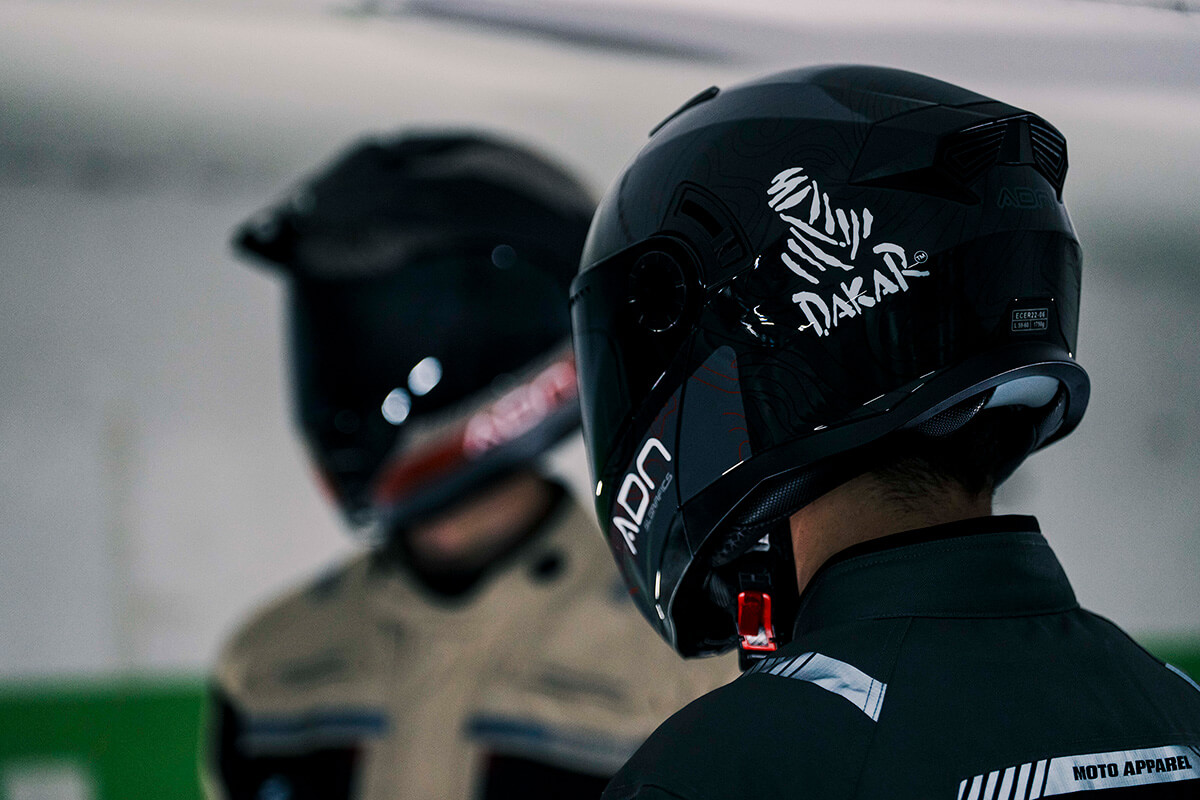
Adventure helmet: for riders who mix pavement and dirt
The adventure helmet —also known as a trail helmet—is a full-face helmet with a visor that extends downward at the front. This visor isn’t just for show: it protects your eyes from the sun when you’re in an upright riding position, which is the typical riding posture on trail and adventure motorcycles, where the handlebars are high and your face is more exposed to direct sunlight.
Most adventure helmets also allow you to remove the visor and wear enduro goggles, making them suitable for mixed use: road and light off-road riding. Some models, such as the ADN Duale, combine this feature with a flip-up chin guard, technically making them a modular adventure helmet with dual certification.
It’s important not to confuse an adventure helmet with a pure motocross or enduro helmet. The adventure helmet is approved for road use (ECE 22.06); the pure off-road helmet is not. The adventure helmet is for riders who spend 80% of their time on paved roads but want to be able to go off-road without changing helmets. If you’re unsure whether to choose an adventure or a trail helmet, here’s the clarification: Adventure helmet vs. trail helmet—are they the same thing?
Who is the Adventure helmet designed for?
- Trail, adventure, or dual-sport motorcycles.
- Routes that combine highways with trails or dirt roads.
- Someone who rides in an upright position and feels the sun on their face.
- Travelers who want versatility without sacrificing protection.
ADN Adventure Helmets
ADN has the Dual and the Duale Dakar. Both are modular adventure helmets with ECE 22.06 certification, a flip-up chin guard, and a removable peak visor. The Duale Dakar is a special edition designed in collaboration with SL Grafics —the Dutch studio that works in MotoGP— and officially unveiled at the Montmeló circuit.
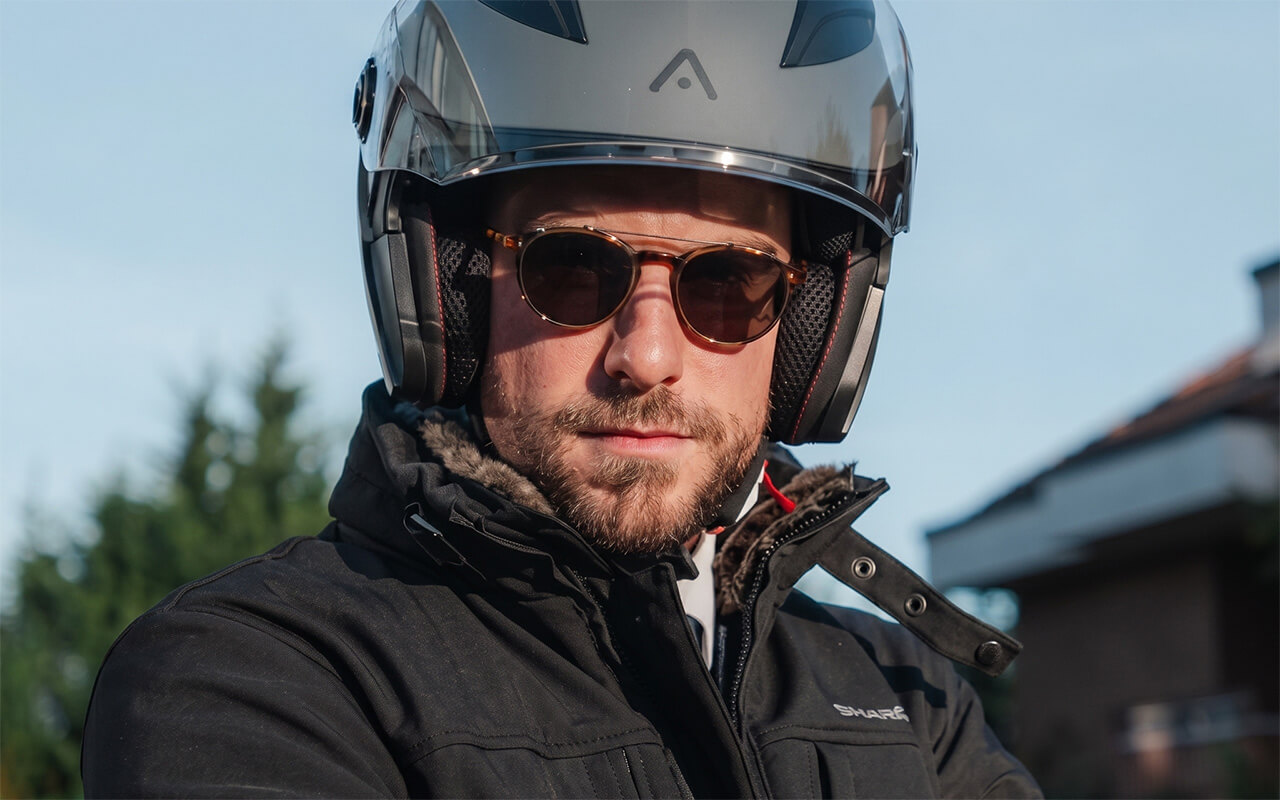
Jet helmet: the coolest, the most comfortable, the one that offers the least protection
A jet helmet is an open-face helmet: it covers the top and back of the head but leaves the face and chin exposed. It is the coolest type of helmet and offers the widest peripheral field of vision, making it especially comfortable for city riding and in the summer.
The trade-off is clear: since it doesn’t have a chin guard, it doesn’t protect the chin and jaw area, which is one of the areas most affected in falls. That’s why the jet helmet is better suited for low speeds and urban environments, and less recommended for highway riding at sustained speeds.
Many jet helmets feature a flip-up sun visor, which significantly enhances the riding experience on routes with changing light conditions. If this is an important factor for you, we explain which models include it and why it matters in our article on jet helmets with sun visors.
In the summer, the jet helmet is also the top choice for ventilation and thermal comfort. You can see which models handle the heat best in our guide to summer motorcycle helmets.
Who is the jet helmet for?
- Scooter or small-displacement city motorcycle.
- I mainly use it in the city or for short trips.
- Summer: You want it as cool as possible.
- Retro style or café racer.
ADN Jet Helmets
The ADN has three jets: the Spritz (compact, designed to fit under a scooter seat), the Cosmo (with a built-in sun visor, the most versatile of the three), and the Mojito (retro look, geared toward city riding and style). If you’re not sure which of the three is right for you, here’s a comparison: Spritz vs. Cosmo vs. Mojito. All three are ECE 22.06-approved.
Summary Table: Types of Motorcycle Helmets at a Glance
| Type | Protection | Ideal for | Key Advantage | ADN Models |
|---|---|---|---|---|
| Integral | Maximum | Highway, daily use, travel | No joints, greater structural rigidity | Stelvio, Veloce |
| Modular | High (closed chin guard) | Touring, city + highway | Flip-up chin guard, P/J certification | Audace |
| Adventure | High | Trail, mixed asphalt/dirt routes | Peaked visor, compatible with enduro goggles | Duale, Duale Dakar |
| Jet | Medium (without chin guard) | City, scooter, summer | The coolest and with the widest peripheral vision | Spritz, Cosmo, Mojito |
Frequently Asked Questions About Types of Motorcycle Helmets
How many types of motorcycle helmets are there?
There are four main types of motorcycle helmets approved for road use: full-face, modular, adventure (or trail), and open-face. In addition to these, there are off-road or motocross helmets, but these are not approved for road use.
What is the safest type of motorcycle helmet?
A full-face helmet offers the most protection, as it covers the entire head without any moving parts or joints. That said, all helmets legally sold in Europe must comply with the ECE 22.06 certification, which is a minimum safety standard that applies equally to full-face, modular, adventure, and open-face helmets.
What is the difference between a full-face helmet and a modular helmet?
The main difference is that the modular helmet has a flip-up chin guard, which allows you to open the helmet without removing it. The full-face helmet is a single, fixed piece with no moving parts, which gives it greater structural rigidity. The modular helmet usually weighs a little more due to the flip-up mechanism. To legally ride with the chin guard open on a modular helmet, the helmet must have dual P/J certification.
What does the P/J certification mean on a modular helmet?
The P/J (Pedestrian/Jet) certification indicates that the modular helmet is approved for use both with the chin guard closed (full-face mode) and with the chin guard open (jet mode). Without this dual certification, opening the chin guard while riding is illegal and constitutes riding without an approved helmet, even if the helmet is being worn.
What is the difference between an adventure helmet and a motocross helmet?
The adventure helmet is approved for road use (ECE 22.06) and is designed for mixed use: pavement and light off-road trails. Motocross or enduro helmets are not approved for road use and are intended exclusively for off-road use, with greater ventilation and no visor. They are not interchangeable.
Are jet helmets legal in Spain?
Yes, jet helmets are completely legal in Spain as long as they are ECE 22.06-approved. The letter “J” on the approval label indicates that it is certified as an open-face helmet. What is not legal is riding without an approved helmet or with one that does not meet current regulations.
What kind of helmet is best for riding in the city?
For urban use, the jet helmet is the most comfortable: lightweight, breathable, and offering excellent peripheral vision. The modular helmet is also a good option for riders who alternate between city and highway riding, since it allows you to open the chin guard at stops without taking off the helmet. The full-face helmet works perfectly well in the city, although it can be more uncomfortable on trips with many stops.
Do all motorcycle helmets offer the same level of safety?
All helmets legally sold in Europe must meet the ECE 22.06 safety standard. This means that an €89 helmet with ECE 22.06 certification has passed exactly the same tests as a €500 helmet. What higher-priced helmets offer is lighter weight, better ventilation, greater comfort, and higher-quality construction—not a higher certification level.