If you’ve searched for motorcycle helmets and come across prices ranging from €40 to over €800, it’s natural to wonder what justifies that difference. And above all: how much should you actually spend.
The short answer is that you don’t need to spend more than €200 to get a safe, well-finished helmet with good performance for everyday use. But there are real differences between price ranges that are worth understanding before you buy.
Motorcycle helmet price ranges
Under €50: avoid them
Helmets exist at this price, but they rarely comply with ECE 22.06 certification, the European safety standard in force since 2024. Some carry seals from poorly rigorous certification bodies or outright fake ones. At this price range, the risk isn’t worth it.
If the budget is very tight, it’s better to look for a certified second-hand helmet than a new one for €40 from an unknown source. You can read more about what ECE 22.06 certification means.
Between €50 and €100: the bare minimum
In this range you’ll already find helmets with genuine ECE 22.06 certification. The shell is typically made of thermoplastic polycarbonate, the liner may or may not be removable, and the finish is basic but functional.
What you won’t get in this range: an integrated sun visor, included Pinlock, adjustable ventilation, or a particularly comfortable interior for extended use. These are valid helmets for short commutes or occasional riding.
Between €80 and €180: the sweet spot for value
This is the range where buying makes the most sense. Here you’ll find helmets with all the right certifications, good finishing, a removable and washable liner, micrometric buckle, and — in the upper end of the range — an integrated sun visor and Pinlock-ready visor.
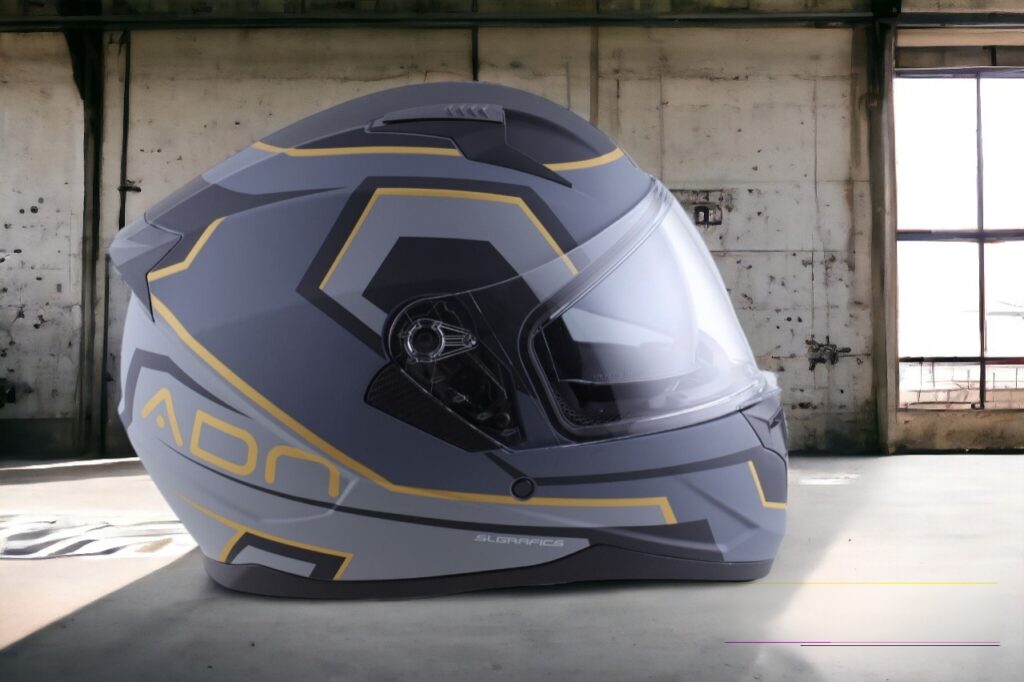
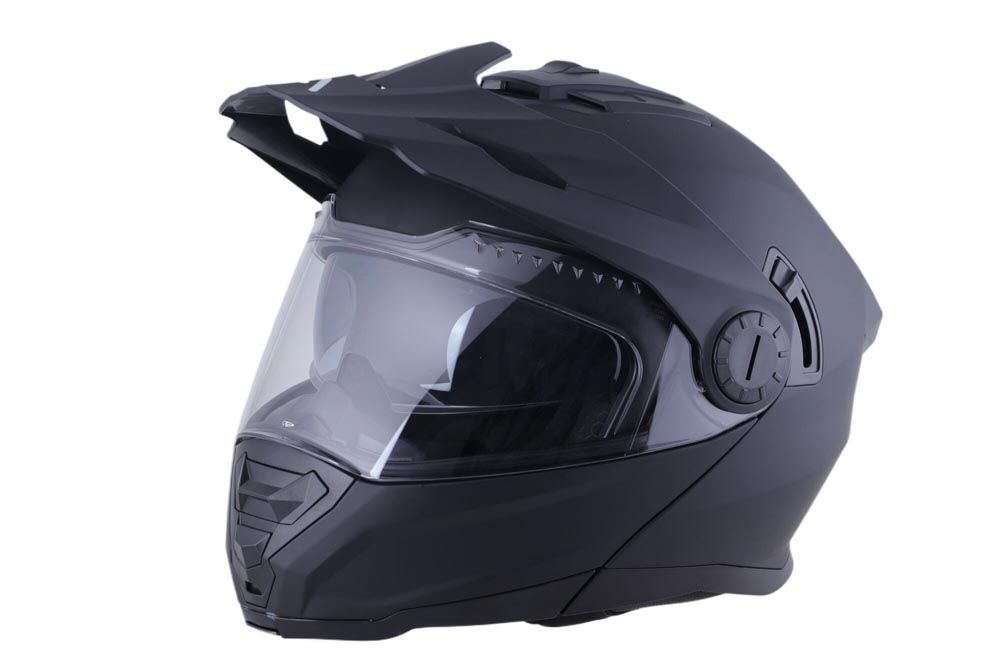
This is where ADN Helmets positions its entire range: from €79.95 for the jet models to €169.95 for the adventure helmet with dual P/J homologation. High-resistance polycarbonate shell, ECE 22.06 on every model, and design developed by the same studio that works with MotoGP teams.
If you want to find out which model fits your riding style best, check out our complete guide to choosing the right helmet for your bike.
Between €200 and €400: advanced performance
In this range, carbon fibre or composite materials start to replace polycarbonate, significantly reducing weight. Ventilation systems, acoustic comfort and interior finishing also improve. These helmets are aimed at riders who cover a lot of kilometres or use their bike as a daily work tool.
Safety remains equivalent as long as the certification is the same. What you’re paying for is primarily comfort and lightness.
Over €400: the top of the market
Pure carbon fibre, competition aerodynamics, integrated communication systems, or luxury brands with a racing heritage. In this segment, road riders rarely take full advantage of the performance these helmets are designed for.
What actually changes with price
There are factors where price makes a real difference and others where the impact is smaller than it seems:
- Shell material: high-resistance polycarbonate performs perfectly for everyday riding. Carbon fibre reduces weight but doesn’t increase certified protection.
- Certification: this doesn’t change with price. An €80 helmet with ECE 22.06 has passed exactly the same impact tests as a €500 one. What changes is everything built around that foundation.
- Ventilation: the higher the price, the more air channels and better thermal management. This matters if you ride in hot urban conditions or go on long trips.
- Weight: fibre helmets are noticeably lighter. On long rides, you’ll feel it in your neck.
- Interior comfort: better foam, greater breathability, improved acoustic sealing. You’ll notice it on multi-hour rides.
- Extras: integrated sun visor, Pinlock-ready prep, quick-release systems, integrated intercom. Each one adds to the cost.
How much should you spend based on your riding?
It depends mainly on three factors: type of use (city, road or long-distance touring), frequency (occasional or several days a week) and typical journey length.
For urban or mixed use with occasional rides, between €80 and €130 is more than enough and you’ll find very complete options. For riders who tour regularly or travel by bike, moving up to €150–200 starts to pay off in terms of comfort.
What doesn’t make sense is buying a €50 helmet thinking you’re saving money. If the helmet doesn’t have the correct certification, it isn’t protecting you.
Frequently asked questions about motorcycle helmet prices
Is a more expensive helmet safer?
Not necessarily. Safety is determined by certification, not price. An ECE 22.06 helmet at €80 has passed exactly the same impact tests as one at €500. What increases with price is comfort, weight reduction, materials and extras.
Is there a difference between an €80 and a €130 helmet?
Yes, but not in terms of safety. In that range, the difference usually comes down to the interior (more comfortable and breathable), ventilation (more channels), the integrated sun visor and overall finishing. These are real improvements you’ll notice in use, but not in certified protection.
Is a carbon fibre helmet worth it?
If you cover a lot of kilometres and helmet weight causes neck fatigue, yes. If you use your bike to commute and for the odd weekend ride, you probably won’t notice enough difference to justify the price. High-resistance polycarbonate performs very well in most situations.
How much does a certified motorcycle helmet cost?
A helmet with genuine ECE 22.06 certification can be found from around €75–80. Below that price, it’s hard to guarantee the certification is legitimate. The most common range for certified helmets with solid performance is between €80 and €200.
How often should you replace your helmet?
The general recommendation from manufacturers and road safety authorities is every 5 years, although this can be shorter if the helmet has taken a hard impact — even with no visible damage. After that time, the materials degrade and protection decreases even if the helmet still looks fine on the outside.