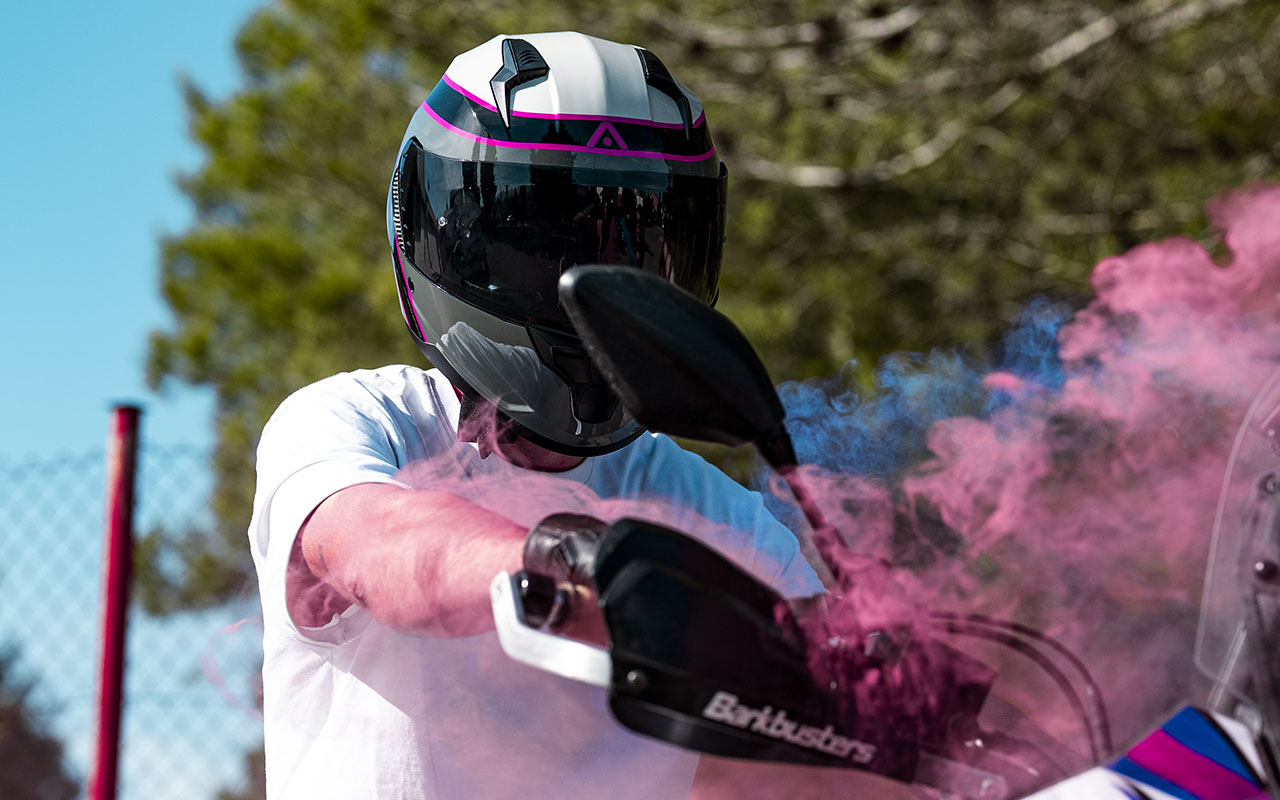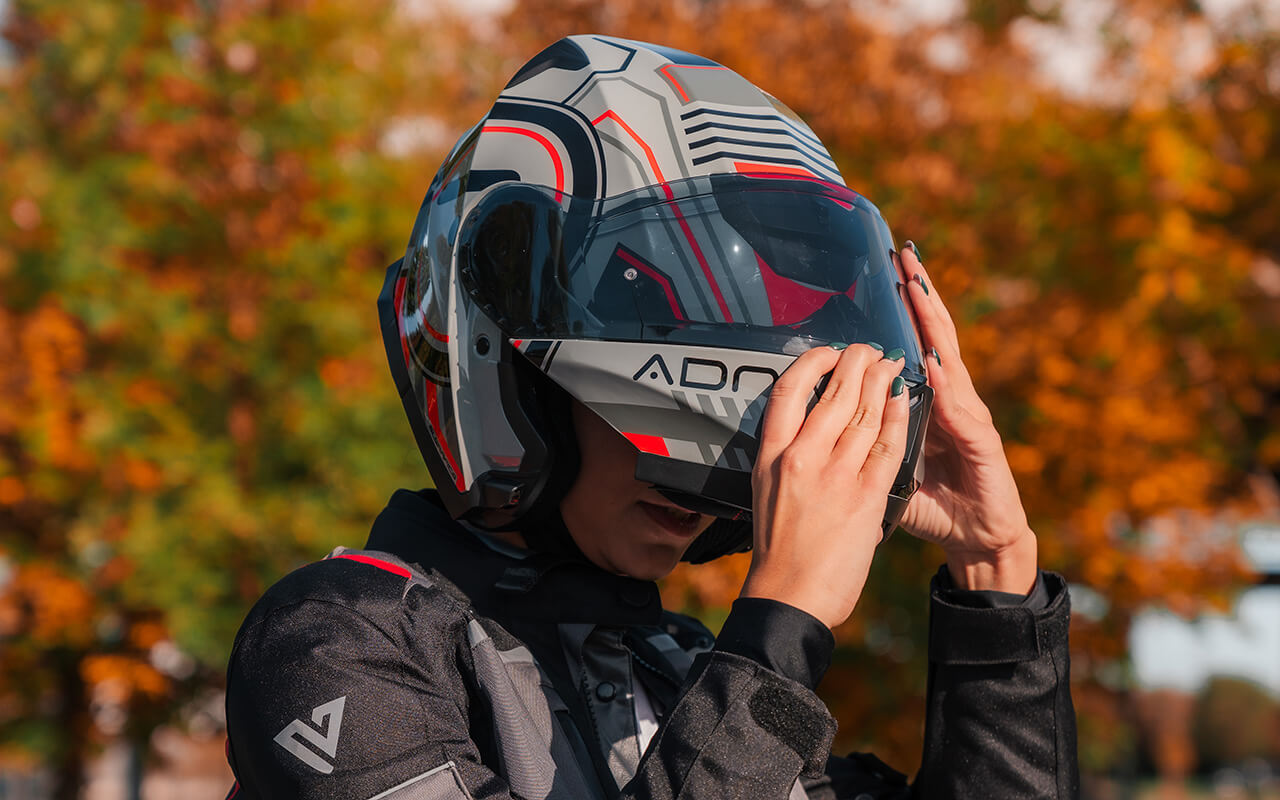

If you get off your motorcycle with a mark on your forehead, a throbbing sensation in your temples, or that feeling of your helmet “digging in,” you’re not alone: it’s one of the most common complaints on biker forums and one of the reasons why many people end up leaving their helmets in the closet instead of wearing them. The good news is that there’s almost always a solution, and it doesn’t always mean buying a new helmet.
In this guide, we’ll go over all the real reasons why a helmet might feel tight and cause head pain, how to tell the difference between normal break-in and a real problem, and what to do step by step to fix it—from checking the size to replacing the liners.
Why Does a Helmet Feel Tight and Cause a Headache?
1. Incorrect size (the most common cause)
It is, by far, the most common reason. Every brand—and even every model within the same brand—has a different last, so wearing the same size as your previous helmet doesn’t guarantee a good fit. A helmet one size smaller than yours will fit snugly and evenly across your entire head, whereas one that’s the right size but has the wrong shape will only feel tight in specific spots. Before deciding whether a helmet is a good or bad fit, check your size with our guide to finding the right size when shopping online.

2. The shape of the helmet doesn’t match the shape of your head
In addition to size (volume), there is also the internal shape: round, oval, or intermediate. If your head is oval and the helmet has a round shape, you’ll feel pressure on the front and back of your head even if the size is correct. This is especially important for full-face helmets, which are designed to fit very snugly for aerodynamic reasons. If you’re unsure which model to choose, the comparison between the Stelvio and the Veloce explains the differences in shape between these two full-face helmets.
3. New Helmet: The Break-in Period
The interior of a new helmet is stiffer and needs a few hours of wear to mold to your head (the padding settles into place with body heat and pressure). It’s normal for the helmet to feel a little tight the first few days, especially around the temples. This shouldn’t be confused with a sizing or fit issue: breaking it in improves the fit, whereas a poorly sized helmet won’t improve over time.
4. Localized pressure point
Unlike a small helmet (which generally feels tight), the pain here always occurs in the exact same spot: the forehead, temple, one side, or the cheek area. This is usually caused by a seam, a raised area in the EPS foam, or padding that’s thicker than your head needs at that exact spot.
5. Interior foam worn out from use
Over the years, both the EPS foam and the padding lose their thickness and shock-absorbing capacity, which can cause the helmet to shift more than it should and press against areas that didn’t bother you before. If your helmet is a few years old, check out our guide on how long a motorcycle helmet lasts and when it’s time to replace it before assuming the problem is just a matter of fit.
6. The opposite problem: a helmet that’s too loose
It may sound contradictory, but a helmet that wobbles can also cause pain: as it moves with the wind or vibrations, it repeatedly strikes the same spots and causes discomfort that feels like “pressure,” even though it’s actually repeated impact due to a lack of support.

Quick Reference Chart: Identify Your Situation
| Symptom | Most likely cause | What to Do |
|---|---|---|
| Even pressure across the entire head | Small size | Check the size and try a larger one |
| Pain only in the forehead and temples | Round shape on an oval head (or vice versa) | Try another model with a different last |
| Mild discomfort; improves with use | Normal break-in period for a new helmet | Use for a few hours before evaluating |
| Pain at a very specific, reproducible point | Localized pressure point | Locate and relieve it, or change your footwear |
| The helmet moves and it hurts, too | Helmet is worn out or not fastened properly | Check the age and fit of the strap |
How to Relieve a Helmet-Induced Headache, Step by Step
Step 1: Make sure the size is correct
Measure the circumference of your head just above your eyebrows and compare it to the size chart for this model—not to the size you wear in another brand. If you bought the helmet online, our size guide explains how to take the measurement correctly and what margin of error is normal.
Step 2: Give it a real try before ruling it out
Use them on short runs (30–45 minutes) for 3–4 days before making a decision. If the discomfort gradually decreases, they’re breaking in. If it stays the same or gets worse, it’s a problem with the size, shape, or pressure point.
Step 3: Locate the exact pressure point
Here’s a simple technique that many motorcyclists use: mark the inside of your helmet—with a little lipstick or something similar—where you feel discomfort, put on a cap or a thin scarf under your helmet, take a short ride, and check where the mark has appeared on the outside. That way, you’ll know exactly which spot on the inside is putting too much pressure on you, instead of going “blind.”
Step 4: Adjust the fit if the overall size is correct
If the helmet’s overall size is right but there’s a specific spot that’s uncomfortable, you often don’t need to get a new helmet: simply replace the inner padding with a different size at that spot. In the Stelvio, Veloce, Audace, Duale, Spritz and Mojito The inner liners are sold as separate replacement parts in various sizes, specifically so you can adjust the pressure point without having to replace the entire helmet.
Step 5: Try on a helmet with a different inner shape
If you’ve already tried different sizes, broken them in, and changed the interior padding, and the pain always occurs in the same spot, the problem is likely the helmet’s last, not your size. In that case, the most effective approach is to try a helmet with a different interior shape before ruling out full-face helmets entirely: the Stelvio vs. Veloce comparison or the comprehensive guide to full-face helmets will help you identify which last fits your head best. If full-face helmets aren’t really your thing, you can also consider a modular, which has a slightly different fit around the jaw area.
Step 6: Make sure the helmet isn’t ready to be removed
A helmet that has been used for many years (or that has been in a previous impact, even if it isn’t visible to the naked eye) loses some of its shock-absorbing capacity and may start to cause pain in places where it didn’t before. Check out our guide on how long a motorcycle helmet lasts to find out if it’s time to retire it. If that’s the case, you can check out the entire current lineup at the ADN Helmets store.

When the pain Isn’t Caused by the Helmet
If you experience a headache even when your helmet is properly adjusted during long rides, and it’s accompanied by tension in your neck or shoulders, the cause is likely your riding posture, crosswinds, or accumulated tension in your neck rather than the helmet itself. This is a separate issue that deserves its own analysis, and we’ll cover it in detail soon on the blog. If the pain is severe, doesn’t subside after several days, or gets worse, consult a healthcare professional rather than trying to resolve it solely by adjusting your helmet.
Frequently Asked Questions
Is it normal for a new helmet to feel tight for the first few days?
Yes, within reason. New insoles are stiffer and mold to your feet with use. If the discomfort decreases with each trip, that’s normal break-in. If it doesn’t change after several days of use, it’s a problem with the size or shape, not break-in.
How do I know if the problem is the size or the shape of the helmet?
If the pressure is even across the entire head, it’s usually a size issue. If the pain is always concentrated in the same spot (forehead, temple, back of the head) while the rest of the helmet is loose, it’s usually a shape issue, not a size issue.
Can I fix a puncture without changing my helmet?
In many cases, yes—by replacing the inner padding with a different size in models that sell inner liners as separate replacement parts, without having to buy a whole new helmet.
How long is a reasonable amount of time to use a helmet before returning it?
As a general guideline, use it 3 to 5 times for short periods (30–45 minutes). If the discomfort doesn’t improve after that, it’s not worth pushing it any further.
Can an old helmet hurt more than a new one, even if they’re the same size?
Yes. EPS foam and padding lose their properties over time and with use, which can lead to pressure points that didn’t exist before.
Could a headache caused by a helmet actually be neck pain?
It can be confusing. If the pain is accompanied by tension in the neck or shoulders and occurs mainly during long rides, it’s likely caused by your posture or the wind, not the helmet fit itself.